What to expect on a work exchange in the UK
You've sorted your route and packed your bags. But there's a layer of preparation that matters just as much as the practical stuff: understanding what to actually expect when you arrive. The tasks, the daily rhythm, the relationship with your host, and what to do if something isn't right. Getting clear on this before you leave makes a real difference to how the experience goes.
Confirm the details with your host before you leave
Get in touch with your host around a week to ten days before you arrive. Don't save it for the day before. Beyond your arrival time, there's quite a bit worth going over: what tasks are planned for the stay, what the meals arrangement is, where you'll be sleeping, and whether there's anything specific to know before you arrive, such as animals on the property, parking, or house rules.
A follow-up message a day or two before is good practice, particularly to reconfirm your estimated arrival time. Hosts are often working around their own schedules, and it helps to know when to expect you.
Keep your communication through the FarFrom platform rather than switching to WhatsApp or email. It gives both sides a clear record of what was agreed, which is useful if anything needs to be referred back to later.
How the exchange actually works
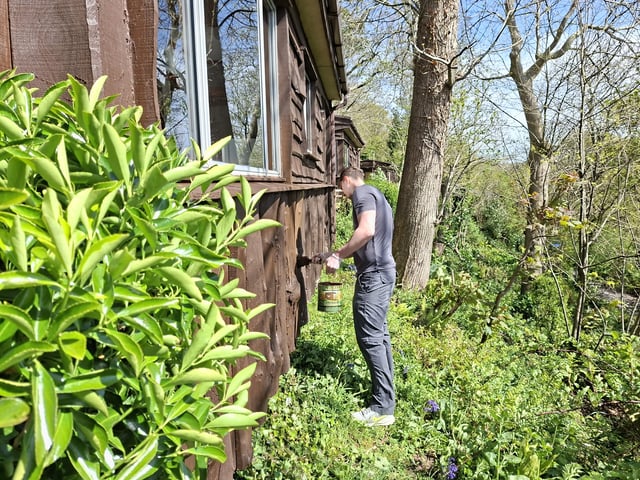
The work-for-accommodation (WFA) exchange is designed to be manageable, not all-consuming. If your host is providing accommodation only, the standard is around two to three hours of practical help per day, five days a week. If meals are included, it's a little more: around four to five hours per day. Weekends are generally your own time, unless something specific has been agreed upfront.
These are guidelines rather than a rigid timetable. In practice, some days run a little longer and others wind down early. What matters is that the overall balance feels fair to both sides and reflects what was agreed before you arrived.
The tasks should be practical and supplementary — the kind of thing you might help a friend with at their property. They're not a replacement for paid staff or core business operations. If the tasks when you arrive look significantly different from what was described in the listing, raise it. A direct conversation at the start of the stay is far easier than letting frustration build over several days.
What life at the property actually looks like
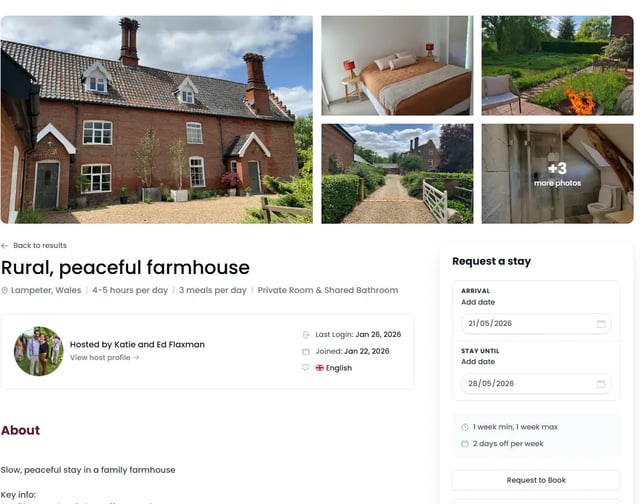
Every property is different. Some volunteers stay in a room within a family home. Others have a self-contained annexe, a cottage on a working farm, or a unit attached to a rural business. The setting shapes what day-to-day life looks like, which is why the pre-arrival conversation matters.
Follow the house rules your host has shared. These may cover shared spaces, noise, pets, areas that are off-limits, or expectations around common facilities. If you're unsure about something, ask rather than assume.
Leave shared spaces as you find them, whether that's a kitchen, a bathroom, or any facility shared with other guests or workers. If something breaks or goes wrong, tell your host promptly.
Your free time outside the agreed hours is yours. Explore the local area, get out and walk, visit nearby towns, or simply rest. Most volunteers find the time away from the tasks as valuable as the tasks themselves.
If something doesn't go to plan
The majority of placements go smoothly. But it's worth knowing what to do if yours doesn't.
If something feels off when you arrive, or if the conditions are different from what was agreed, raise it with your host directly and early. Most issues come down to misaligned expectations, and a direct conversation at the start of the stay resolves them far more effectively than letting things build up.
If you need to leave early, tell your host as soon as you know and give them as much notice as you can.
If you've tried to raise a concern and it hasn't been addressed, or if you feel unsafe, contact FarFrom directly through the platform.
FarFrom is a UK work-for-accommodation platform connecting volunteers with hosts across the country, from stately homes and glamping sites to farms and rural retreats. Every host goes through a review and approval process before going live on the platform. The platform messaging is there to use throughout your placement, including when things aren't going to plan.
Browse available placements at Search | FarFrom