
Travelling as a couple UK: How it let's you travel more
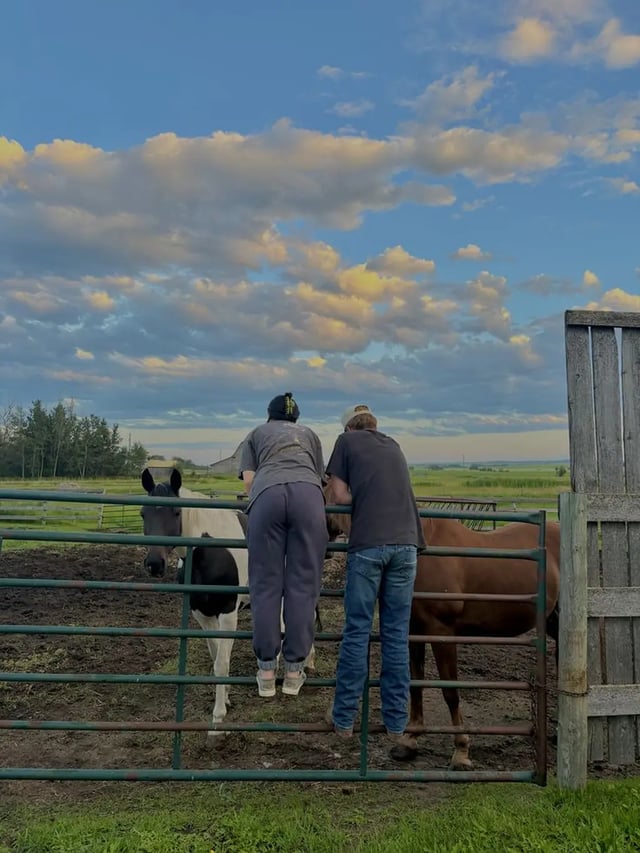
Most couples hit a point where the usual holiday formula stops doing what it's supposed to do. You've done the city breaks and the beach weeks. You're together, technically, but you're consuming experiences rather than sharing them. There's a difference.
The thing that tends to shift that, more often than people expect, is doing something practical side by side. Not just being somewhere together, but actually working on something together.
Work-for-accommodation (WFA) is a model built around exactly that. You and your travel companion offer a few hours of practical help each day to a UK property host, and they provide free private accommodation in return. No money changes hands and no employment contract is involved. It's closer to an extended working stay than either volunteering or a holiday in the traditional sense.
What a WFA stay looks like for two people
Most hosts welcome couples or pairs. From a host's perspective, two motivated people arriving together is often preferable to one: the work gets done, and the dynamic tends to be more settled.
The hours are typically four to five per day, shared between you. After that, the time is your own. Accommodation is private throughout, usually a cottage, cabin, or converted outbuilding, and you won't share space with other volunteers. Stays can run from a long weekend to several weeks, depending on what the host needs and what suits you both.
Why shared purpose changes things
Research consistently shows that couples who take on novel experiences together report feeling more connected. The effect is stronger when the experience involves some kind of practical challenge or shared goal, rather than passive consumption. Helping restore a kitchen garden, working with animals for the first time, or maintaining the grounds of a rural estate all fit that description.
NCVO's Time Well Spent survey found that 77% of volunteers reported improved mental health and wellbeing as a result of volunteering (Source: NCVO, 2019). That's a significant figure on its own. Add in the dimension of doing it with someone you're close to, with a shared goal and a shared space to return to each evening, and the case becomes even stronger.
Couples also tend to arrive with a broader combined skill set than solo volunteers. One of you might be more confident in the garden; the other might be better with animals or practical repairs. Hosts who take on pairs are often working with that complementary range in mind.
What the work actually involves
This varies by property, but common tasks across WFA placements include gardening and grounds maintenance, gardening, general farm work and livestock feeding, practical upkeep such as fencing and path clearing, glamping site preparation, and light heritage property maintenance.
The important thing to look for in any listing is a clear description of what the work involves day to day, and whether it suits you both. Some placements are physically demanding and involve early starts. Others are slower-paced, more suited to someone who wants to spend a few hours each morning doing methodical work in a walled garden and have the afternoon free.
How to find a placement that suits you both
Not every WFA placement is designed with two people in mind. It's worth reading listings carefully: check that the accommodation suits two people, that the work described is realistic for you both, and that the host has clearly stated they welcome couples or pairs.
FarFrom is a UK work-for-accommodation platform connecting volunteers with hosts across the country, from rural estates and glamping sites to farms and historic retreats. All hosts go through a review and approval process before listing, and placements are described in enough detail to help you decide whether the work and the setting are right for you as a pair.
If you're looking for a different kind of UK trip, browse available placements at Search | FarFrom