Work for accommodation with alpacas: insights from our SWRAG webinar
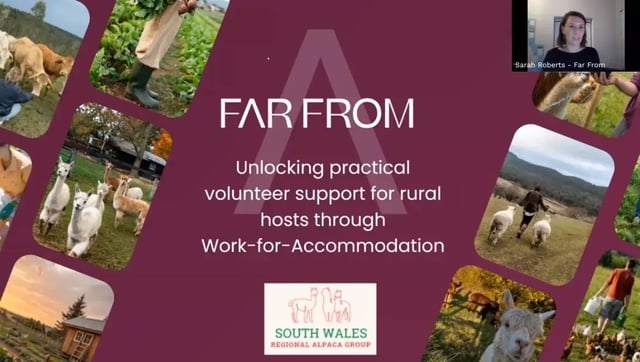
Last week, FarFrom hosted a webinar with members of the South West Regional Alpaca Group (SWRAG) to explore how work for accommodation (WFA) can support alpaca farms across the South West and all across the UK.
The session was designed specifically for alpaca owners, many of whom run small, hands-on farms where extra help is valuable but traditional staffing isn't always practical. Our aim was simple: clearly explain what work for accommodation is, who it suits, and how it can work safely, legally, and fairly for farm owners.
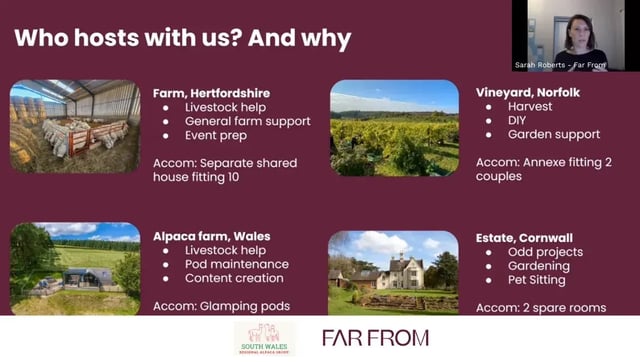
What we covered in the webinar
During the session, we walked farm owners through the basics of the work-for-accommodation model and how it applies to alpaca farms in particular.
Key topics included:
- What work for accommodation actually is – a voluntary exchange where people help out for a few hours a day in return for accommodation
- The types of properties it works for, including alpaca farms with seasonal workloads, quieter periods, or spare accommodation
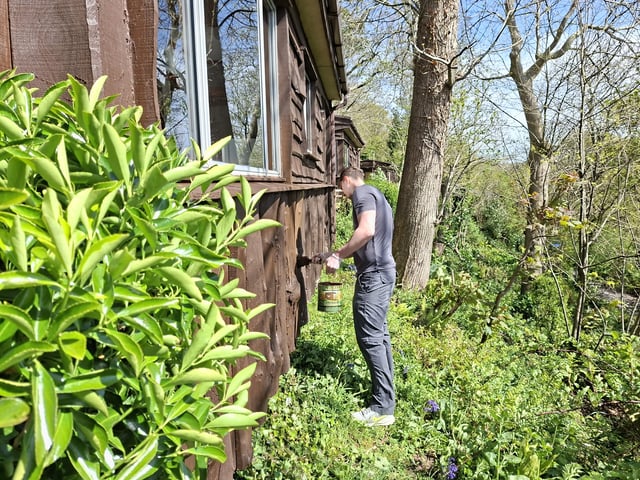
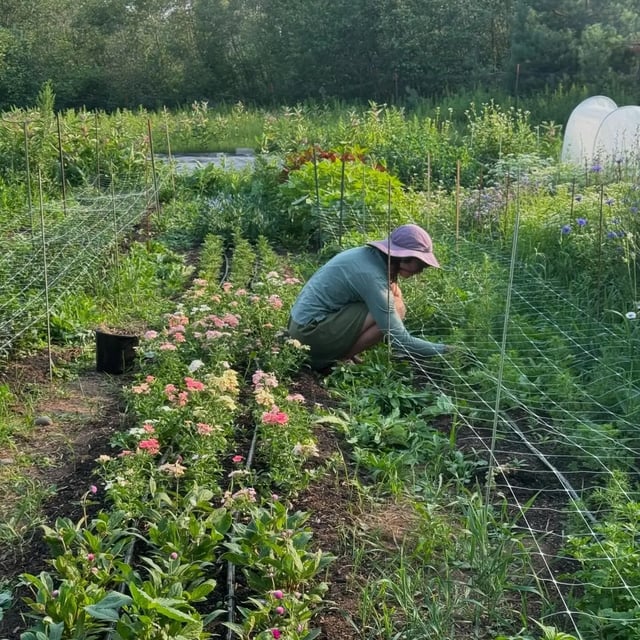
- What volunteers typically help with, such as animal care support, feeding, mucking out, fencing, maintenance, gardening, and general farm tasks
- Who volunteers usually are – often people aged 30–55, taking career breaks, semi-retirement, or travelling more slowly around the UK
We also shared real examples of how alpaca farms already use WFA to get reliable, flexible help during busy periods like birthing season, events, or holiday peaks. With a few of our current hosts already being SWRAG members.
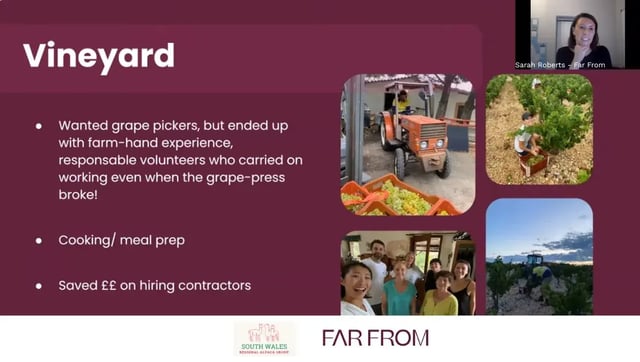
Questions from alpaca farm owners
The second half of the webinar was a live Q&A, where SWRAG members asked thoughtful, practical questions; "How does the review system work?", "Can volunteers bring campervans and stay in those?" and many more.
These conversations were invaluable, and they reinforced how important clarity, boundaries, and transparency are for successful work-for-accommodation placements.
Thank you
We're incredibly grateful to South West Regional Alpaca Group for inviting us to speak and for the open, engaged discussion from its members.
If your organisation supports farms or rural businesses, and would be interested in hosting a similar webinar, we'd love to hear from you.