How UK property owners are responding to the cost of living crisis with work for accommodation
The cost of living crisis has reshaped how UK property owners think about running and maintaining their spaces. From rising energy bills to inflation driven supplier prices, the financial pressure is not limited to households. It is affecting estates, farms, vineyards, heritage homes and rural businesses just as significantly.
For many, the biggest strain is not just revenue. It is property costs and maintenance costs.
Increasingly, owners are exploring a practical and compliant alternative: work for accommodation.
The growing pressure on property owners
Across the UK, property owners are navigating:
- Higher energy and heating bills
- Increased insurance premiums
- Rising material costs
- More expensive contractors and skilled labour
- Seasonal staffing shortages
- Ongoing building and grounds maintenance
For heritage properties and large rural homes, maintenance is rarely optional. Roof repairs, gardening, repainting, fencing, harvesting, livestock support, cleaning and general upkeep are continuous responsibilities.
While hiring staff can solve these challenges, employment brings payroll costs, National Insurance contributions, pension obligations and long term commitments. During a prolonged cost of living crisis, many owners are understandably cautious about expanding payroll.
This is where work for accommodation has become a compelling solution.
What is work for accommodation?
Work for accommodation is a voluntary, non employment exchange where individuals contribute a few hours of help per day in return for a place to stay.
It is not paid labour. It is not employment. And it is not designed to replace staff.
Instead, it offers flexible, short term support for projects and seasonal workloads, helping to manage property costs and maintenance costs without creating long term financial liabilities.
Why work for accommodation makes sense right now
Reducing pressure on maintenance budgets
Many property owners are finding that routine upkeep is where budgets feel tightest.
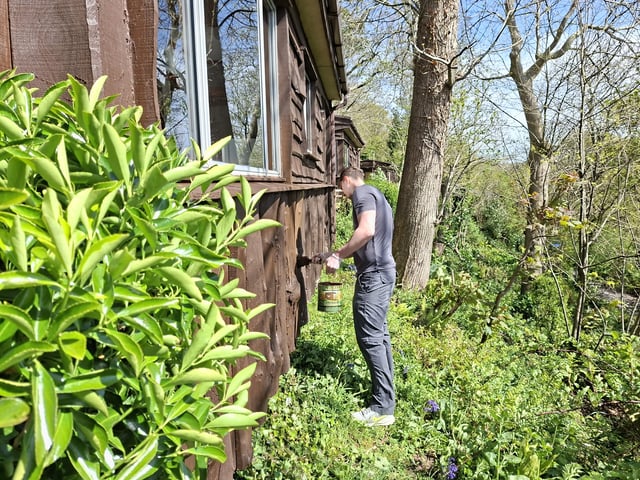
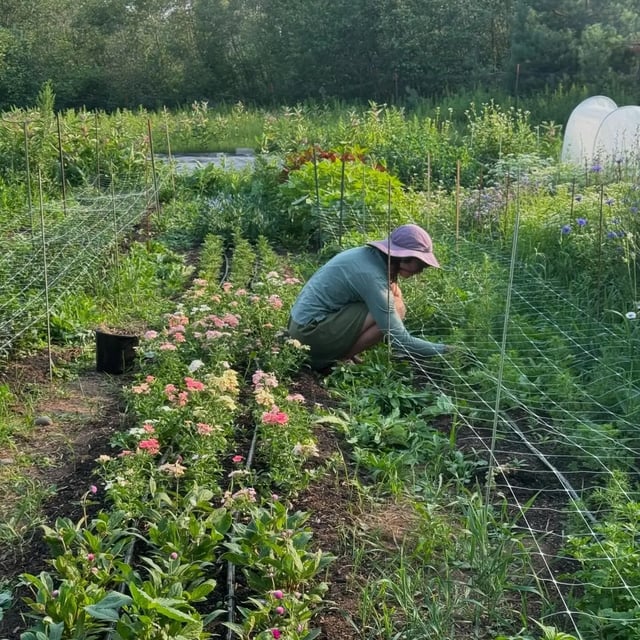
Gardens need attention. Outbuildings need repainting. Seasonal harvests require extra hands. Holiday lets need turnover support.
Rather than delaying work, which often increases long term repair bills, work for accommodation allows owners to tackle ongoing tasks in a manageable way.
In a period defined by the cost of living crisis, this flexibility is valuable.
Avoiding long term staffing commitments
Hiring staff means ongoing financial responsibility, even when workloads fluctuate.
Work for accommodation allows owners to host volunteers for defined timeframes, often a few weeks, aligned to specific projects or busy periods. This helps manage property costs and maintenance costs without permanent payroll expansion.
For farms, vineyards and event venues with strong seasonality, this model can be particularly effective.
Being flexible when support is needed
One of the biggest advantages during the cost of living crisis is flexibility.
Property owners do not always need year round help. They may need additional hands for lambing season, vineyard harvest, preparing a wedding venue, restoring a garden, repainting a cottage or clearing land.
Work for accommodation allows hosts to bring in support when it is genuinely needed, rather than committing to permanent contracts. This responsive approach helps manage property costs and maintenance costs more strategically.
Instead of carrying ongoing employment costs, owners can align support with real demand.
Making better use of underused space
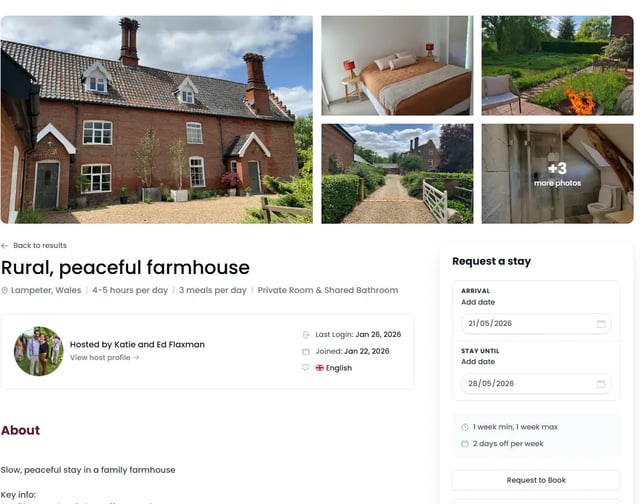
Many rural and heritage properties have spare rooms, annexes, cottages or converted outbuildings that sit empty for parts of the year.
During the cost of living crisis, leaving usable accommodation vacant can feel like a missed opportunity.
Work for accommodation turns that unused space into practical value by exchanging it for help that supports the property.
A practical response to economic pressure
The cost of living crisis continues to shape decision making across the UK. Rising property costs and maintenance costs are forcing owners to think carefully about how they sustain and protect their properties.
Rather than cutting back on essential upkeep or overextending financially, many are choosing adaptable models that reflect today's economic reality.
Work for accommodation is not a shortcut. It is a structured voluntary exchange that offers flexibility, cost management and project based support.
In challenging economic conditions, resilience often comes from using existing resources more intelligently.
For many UK property owners, that begins with a spare room and a more flexible approach to managing property costs.